

Ceramic Coating vs Wax: Which Is Better for Your Car?
If you’ve ever asked a detailer, “wax or ceramic coating?” you’ve probably been given a rehearsed sales pitch and not a straight answer. Here is the simple answer.
Wax and ceramic coating are both good for protection. But they have different uses.
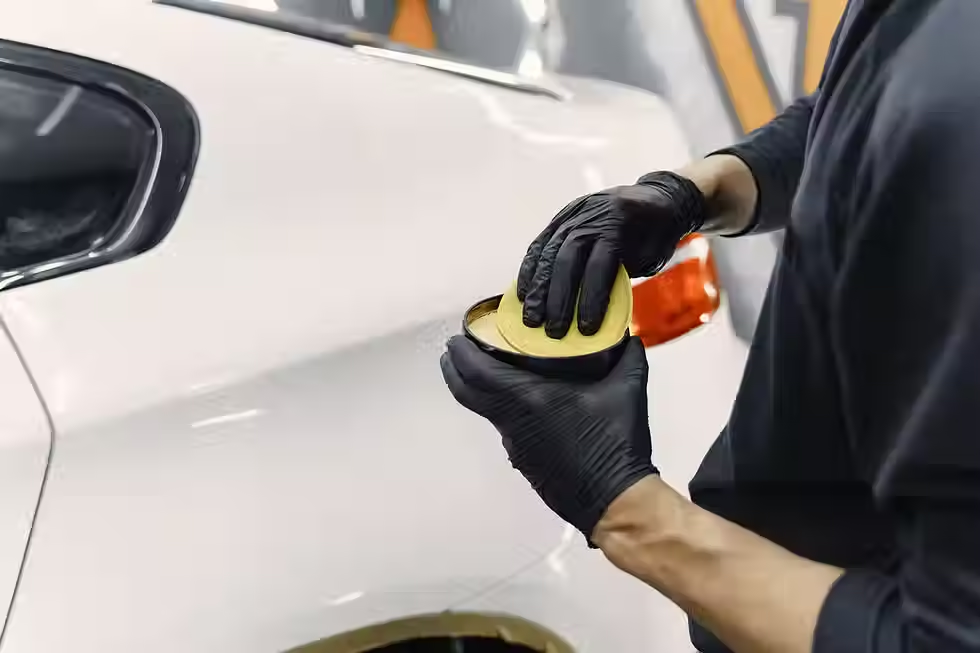
Wax is a soft natural or synthetic layer on top of your coat. It has a nice shine, smells good, and comes off easily.
Ceramic coating is a liquid polymer that bonds chemically to the clear coat. It forms a durable surface that repels UV rays, contaminants, and minor chemical etching for a long time.
You can avail any service depending on your requirement from a car detailing service.
This guide explains the difference between the two and how they stand up to Chicago’s weather, and which one is right for your vehicle.
Ceramic Coating vs Wax: Quick Answer
Ceramic coating lasts years; wax lasts for a few weeks.
A professionally applied ceramic coating can protect your paint for 2–5 years with minimal maintenance.
Wax sits on top of the paint as a sacrificial layer. It needs to be reapplied every 1-3 months
For drivers who face road salt, snow, and outdoor parking, ceramic coating is often the better long-term choice. Wax still works for owners on a budget. It also helps when you need short-term protection.
What Is Car Wax?
Car wax is a protective coating applied to the car’s finish to provide a deep shine and a sacrificial layer against UV rays, oxidation, and contaminants. It can be made from natural carnauba wax, petroleum by-products, synthetic polymers, or a blend of these materials.
How it works:
Applied on the car’s finish. Wax fills in the imperfections in the clear coat and provides a sacrificial layer that is easily removed during the wash, prolonging the life of the clear coat by taking the UV damage and road contaminants itself.
Benefits:
Cheap and easy to use
Adds a warm, deep shine that many owners prefer aesthetically
Quick way to refresh a car's appearance before selling or a road trip
Limitations:
Breaks down fast in harsh conditions
Offers minimal resistance to scratches
Requires reapplication every 4–12 weeks depending on exposure
Who should use it: Wax is great for people who like to detail their car themselves. It is an affordable, easy-to-use, temporary layer of protection. It can also be used occasionally for cars that are parked outside to provide extra UV protection.
What Is Ceramic Coating?
It is a liquid protective coating. Normally made with silicon dioxide (SiO₂). It bonds to your vehicle's clear coat and hardens into a durable, glass-like protective layer.
How it works:
Ceramic coating undergoes a chemical process that forms covalent bonds with the finish. This creates a chemically resistant surface with high water resistance. This is why coated cars show tighter, faster-sheeting water beads instead of the flatter beads you see on waxed paint.
Benefits:
It lasts 2–5 years if a good quality coating is used and proper care is given.
Strong resistance to UV fading, oxidation, and contamination.
Makes washing easier since dirt and grime have less to grip onto
Maintains a deep, glossy finish without monthly reapplication
Limitations:
Expensive than wax
Does not prevent scratches
Improper application (skipping paint correction, poor surface prep) reduces lifespan
Who should buy it:
Owners who normally park outside, or plan to keep their vehicle for several years. And want to minimize ongoing maintenance.
We have coated hundreds of vehicles all over Chicago, and we have seen the same pattern over and over again. Vehicles that do not get paint corrected before coating will end up with the coating locking in the existing swirl marks and light scratches. A proper ceramic coating job starts with a paint inspection and correction steps.
Head-to-Head Comparison: Ceramic Coating vs Wax
Protection
Ceramic coating offers stronger protection against UV rays, oxidation, and chemical grime.
Wax provides a lighter coating, and it degrades quickly. It is better than using no protective material.
Shine
This is where preference matters. Wax gives a warmer, "wet-look" shine that some owners like. Coating produces a glassier, more reflective finish that looks sharper in direct light and holds that look far longer.
Maintenance
Wax needs consistent reapplication to keep working; skip a month or two and your protection is gone.
Coating needs regular washing (ideally with pH-neutral soap), but there's no need to apply it constantly.
Lifespan
Wax: weeks to a few months.
Ceramic coating: 2–5 years for professional-grade products.
Ease of Application
Wax is beginner-friendly. Coating requires proper paint preparation and careful application, so it's usually best installed by a trained professional, especially for first-time applications.
Durability
Wax: Lasts 4–12 weeks before needing reapplication. The number is different for every car, depending on how often the car is washed and how much sun and road exposure it gets.
Coating: Designed to last years.
Value Over Time
On a strict cost-per-month basis, ceramic coating often works out cheaper over the long run, since you're not repeatedly buying wax and paying for reapplication labor. Wax wins on lowest possible upfront cost.
Quick Comparison Table
Feature | Car Wax | Ceramic Coating |
Typical lifespan | 1–3 months | 2–5 years (professional grade) |
UV protection | Moderate | Excellent |
Hydrophobic (water beading) | Good, fades quickly | Excellent, long-lasting |
Scratch/swirl resistance | Minimal | Improved, not scratch-proof |
Chemical/salt resistance | Weak | Strong |
Maintenance required | Frequent reapplication | Regular washing, no reapplication |
Upfront cost | Low ($20–$100 DIY; $75–$200 pro) | Higher ($500–$1,500+ professional) |
Best for | Short-term shine, tight budgets | Long-term protection, daily drivers, outdoor parking |
DIY-friendly | Yes | Not recommended for beginners |
Common Mistakes People Make
Applying wax over dirty paint.
Skipping paint correction.
Washing a freshly coated car.
Assuming ceramic coating means "never wash again."
Buying a low-quality or cheap DIY ceramic kit expecting results.
Believing either product prevents scratches.
Step-by-Step: How Professional Application Works
Wax application (professional):
Wash and dry the vehicle.
Remove bonded contaminants by using a clay bar.
Apply wax in small, even coats.
Allow it to haze, then wipe with a microfiber towel.
Ceramic coating application (professional):
Wash the car to decontaminate the paint.
Check the condition of the paint and perform any correction/polishing needed to remove swirls and oxidation.
Remove any polish oils using an isopropyl alcohol solution.
Apply the ceramic coating in sections, using proper tools and lighting.
Flash off the coating, and level the spots before the coating fully cures.
Cure the vehicle (preferably in a closed building) for the specified amount of time recommended by the manufacturer before the first wash.
This is also why ceramic coating is expensive. It includes labor costs in addition to the products.
Professional vs. DIY: Which Should You Choose?
Factor | DIY Wax | DIY Ceramic Kit | Professional Wax | Professional Ceramic Coating |
Cost | Lowest | Low–Moderate | Moderate | Highest upfront, best long-term value |
Skill required | Low | Moderate | None (outsourced) | None (outsourced) |
Typical lifespan | 4–8 weeks | 6–18 months | 6–12 weeks | 2–5 years |
Risk of application error | Low | Moderate–High | Very low | Very low |
Includes paint correction | No | No | Sometimes | Usually recommended/included |
Best for | Budget owners, quick refresh | Enthusiasts comfortable with detailing | Owners wanting convenience | Owners wanting maximum protection and longevity |
When to Hire a Professional
Consider a professional application rather than DIY when:
You want the coating’s full advertised lifespan (2–5 years), which depends on proper surface prep and curing conditions most owners can’t replicate at home.
Your paint has swirl marks, oxidation, or scratches that need to be corrected first.
You are laying out $500+, and want some assurance of workmanship, some warranty to back the job.
You park outside year-round in Chicago, so you need the best protection from salt and UV exposure.
Decision Guide
Choose wax if:
You want a cheaper option.
You like to detail the car yourself.
You only need coverage for a short period of time. (e.g., just before selling the car).
You want maximum flexibility to change products or finishes frequently.
Choose ceramic coating if:
You park outside year-round in Chicago's salt, snow, and sun.
You want to keep the car for several years.
You want to reduce time and cost of repetitive maintenance.
You want the best protection possible without a full PPF install.
Decision Matrix
If you... | Recommended Option |
Drive daily and park outdoors | Ceramic coating |
Own a luxury or high-value vehicle | Ceramic coating (often paired with PPF on high-impact areas) |
Manage a fleet of vehicles | Ceramic coating for lower long-term maintenance labor |
Plan to sell the car within 6 months | Wax (lower cost, still improves curb appeal) |
Want a weekend DIY project | Wax or a DIY ceramic kit (with realistic expectations) |
Have existing swirl marks or oxidation | Paint correction + ceramic coating |
Seasonal Maintenance Checklist (Chicago Vehicles)
Summer: Don't let heat and sunlight bake contaminants into your paint. Make sure to wash every couple of weeks. It helps keep the surface clean, and using a coating booster (if your installer recommends one) can help maintain its water-repellent performance.
Spring: Inspect for etching and consider paint correction before a new coating season.
Fall: Get paint inspected and coated/waxed before winter salt season begins.
Winter: Wash regularly to remove salt buildup (even in cold weather); avoid automatic car washes with harsh brushes on freshly coated or waxed paint when possible.
Not Sure Which One Your Car Actually Needs?
The best choice depends on your vehicle's paint condition, how much you drive, local climate, and where the car is parked.
If you're looking for professional mobile car detailing in Chicago, ChiTown Mobile Wash can assess your vehicle's condition and recommend the best way to keep your paint looking its best. Contact our team to learn more about our mobile detailing services.
Frequently Asked Questions
Is ceramic coating better than wax?
Yes, ceramic coating lasts longer than wax. And it provides stronger protection against UV rays and contaminants, and requires less ongoing maintenance.
Does ceramic coating prevent scratches?
Not fully. Ceramic coating improves resistance, but it won't stop deeper scratches or rock chips. For scratches, paint protection film (PPF) is more appropriate.
Does ceramic coating replace wax?
Yes. Most professionally coated vehicles don't need waxing. You can still apply a wax-based topper for extra shine, but it's optional, not necessary for protection.
How often should you wax a car?
Most owners should reapply wax every 4–12 weeks, or more often if you park outside or drive in tough conditions.
How long does ceramic coating last?
Professionally applied ceramic coatings generally last 2–5 years with proper care and regular washing.
Is ceramic coating waterproof?
It isn’t completely waterproof. Ceramic coating is highly water-repellent, so water beads up and rolls off the surface easily.


Comments