

Car Seat Stain Removal in Chicago
Most car seat stains come out with hot water extraction, and the older the stain, the harder it is to remove. Coffee, soda, food, mud, and road salt respond well. Ink, bleach, dye transfer from clothing, and stains that have been through repeated heat cycles are the difficult ones. Chi Town Mobile Wash treats car seat stains at your home or office anywhere in Chicagoland.
What comes out - and what doesn't
Straight answers, because the wrong product on the wrong stain can set it permanently.
Stain | Comes Out? | Notes |
|---|---|---|
Burns and melted fibers | No | Physical damage; needs panel repair or replacement |
Sun-faded upholstery | No | Fading is not a stain; it's UV degradation |
Bleach and chemical damage | No | The color is gone, not covered. Requires re-dyeing |
Dye transfer from jeans | Sometimes | Common on light leather; may be permanent |
Ink and marker | Sometimes | Depends on ink type and how long it has sat |
Old milk | Often | Odor is the real problem; may need repeat treatment |
Makeup and sunscreen | Often | Oil-based; responds to solvent pre-treatment |
Blood | Often | Cold water only - heat sets the protein permanently |
Vomit | Usually | Same as above; act fast, the acid can affect fibers |
Pet urine | Usually | Needs an enzymatic cleaner to break down odor at the source |
Mud and dirt | Usually | Should be dried and extracted, never scrubbed wet |
Food, grease, sauce | Usually | Oily stains need a degreasing pre-treatment first |
Road salt (white rings) | Usually | Very common on Chicago floor mats and lower seat edges |
Soda and juice | Usually | Sugar residue attracts new dirt, so full extraction matters |
Coffee and tea | Usually | Extracts well. Faster treatment = better result. |


How professional car seat stain removal works
Identify the stain. Water-based, oil-based, protein-based, and dye stains each need a different chemistry. Guessing is how stains get set permanently.
Dry vacuum. Loose debris comes out first so it doesn't turn into mud when moisture is introduced.
Pre-treat. The stain gets the matching product and time to dwell. Dwell time is the step most DIY attempts skip, and it's the one that does the work.
Agitate. Gentle brushing to work the product into the fibers without abrading them.
Hot water extraction. Heated solution is injected into the fabric and immediately vacuumed back out, carrying the dissolved stain with it. This is the difference between removing a stain and moving it around.
Repeat. Older stains often need two or three passes. One aggressive pass damages fabric; several gentle ones don't.
Neutralize and dry. pH neutralizer prevents residue that would attract new dirt, then we speed the drying.
Why DIY often makes it worse
Common mistakes we get called in to fix:
Scrubbing hard. This drives the stain deeper and frays the fabric nap, leaving a permanently fuzzy patch even after the color comes out.
Household carpet cleaner or dish soap. They foam heavily and leave residue that automotive extractors struggle to remove. That residue then attracts dirt, so the spot re-soils darker than the surrounding fabric within weeks.
Too much water. Soaking a seat pushes the stain into the foam cushion, where it wicks back to the surface as it dries. Worse, wet foam that can't dry grows mildew.
Heat on protein stains. Hot water on blood, milk, or egg cooks the protein into the fiber. Cold water first, always.
Magic eraser on leather. It's a fine abrasive. It removes the stain and the protective topcoat with it.
If you've spilled something right now: blot - don't rub - with a clean dry cloth, working from the outside of the spill inward, and call us before applying any product.
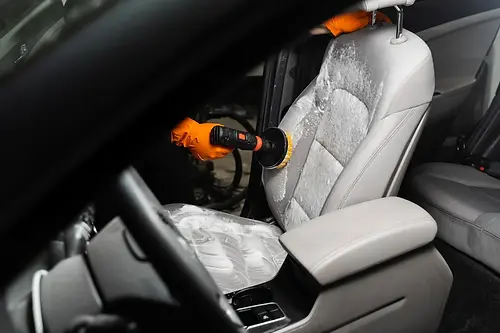


Chicago's most common car seat stains
Road salt. From November through March, salt tracks in on shoes and boots and dries into white rings on carpet, floor mats, and the lower edges of seats. Salt is hygroscopic - it holds moisture - so it keeps carpet damp and can corrode the floor pan underneath. It's the single most common stain we treat in Chicagoland, and it's why a spring interior detail is worth booking.
Coffee. Long commutes on the Kennedy, the Edens, and the Eisenhower mean coffee gets drunk in the car, and coffee gets spilled in the car.
Winter slush and mud. Melting snow carries road grit into the cabin, and it dries into gray-brown staining across driver's-side carpet.
Pet accidents. Dogs going to the lakefront, the dog beach, or the vet.
Kid spills. Juice, milk, crushed snacks in the seat seams - the standard family-car trio.
What does car seat stain removal cost in Chicago?
Spot stain treatment is priced by how many stains there are and how far in they've set. It's frequently more economical to book a full interior detail - every seat, all the carpet, and all surfaces - than to pay for several individual spot treatments.
Interior detailing in the Chicago area typically runs $150–$300. Our Full Custom Detail, covering interior and exterior, starts at $325.
Send us a photo of the stain when you inquire and we'll tell you what's realistic before you book. Contact us

What our customers say
"Lorenzo did a fantastic job on my car. He got old stains out of the seats that I never expected to come out. He & Martha are super nice & responsive also. On top of it all, the price was excellent. Highly recommend!" - Laurie C., Chicago, IL
"I made an appointment and he showed up exactly on time. They brought everything they needed with them, so I didn't have to arrange for drop off and pick up. He did a wonderful job for a reasonable price." - Mary H., Glenview, IL
Frequently asked questions
Is there any stain you can't remove?
Yes. Bleach damage, sun fading, burns, and melted fabric are damage rather than staining, and cleaning won't fix them - they need re-dyeing or panel repair. We'll say so upfront instead of taking your money.
How long do car seats take to dry?
Typically 4 to 8 hours with the windows cracked. In humid summer weather or cold conditions, allow overnight. We extract as much moisture as possible so seats are damp rather than wet when we leave.
Will the stain come back after cleaning?
It shouldn't. Stains that reappear were either not fully extracted from the foam beneath the seat, or a cleaning product residue was left behind that attracts dirt. Proper extraction and pH neutralizing prevents both.
Can you remove stains from leather car seats?
Yes, with pH-balanced leather cleaners and conditioner. Leather stains differently from fabric - spills sit on the surface longer, giving you more time to act, but dye transfer from dark clothing soaks into the topcoat and can be permanent on light-colored leather.
How do you remove salt stains from car seats and carpet?
Salt dissolves in water, so hot water extraction removes it well. A mild acidic solution helps break up heavy white crusting first. The important part is extracting the salt out rather than dissolving it and letting it dry back in place.
How do you get coffee out of a car seat?
Blot up what you can, pre-treat with an alkaline cleaner, let it dwell, agitate gently, then extract with hot water. Repeat until it's gone. Don't scrub - scrubbing drives the coffee deeper and damages the fabric nap.
Can old stains still be removed from car seats?
Often, yes. Stains that have been through repeated heat cycles in a parked car are harder, but hot water extraction removes many stains that look permanent. Success depends more on what the stain is than on how long it's been there.